
How to Recycle Cobalt-Containing Batteries: A UK Household Guide
Most of the rechargeable gadgets in a British home—phones, laptops, cordless drills, e-bikes—run on lithium-ion cells that contain cobalt. When one dies, the instinct is to bin it. Resist that. A damaged lithium-ion battery can spark a fire in a bin lorry or at a waste plant, and the cobalt inside is worth recovering. Recycling them is straightforward once you know the steps.
Why cobalt-containing batteries need care
Cobalt is a key ingredient in many lithium-ion cathodes. It helps cells store a lot of energy in a small space, which is why these batteries power everything from toothbrushes to e-scooters. That energy density is also the problem. If a cell is crushed, punctured or overheated, it can short internally and go into what engineers call thermal runaway: a chain reaction that produces intense heat, smoke and, sometimes, flames.
That is why batteries do not belong in your general waste or kerbside recycling. They also contain valuable metals—cobalt, nickel, copper, aluminium—that can be recovered and used again. Recycling them reduces the demand for newly mined material and keeps a fire risk out of the waste stream.
Identify what you are dealing with
Most rechargeable lithium-ion batteries contain cobalt, though exact chemistries vary. You will find them in:
- Mobile phones, tablets and laptops
- Smartwatches, earbuds and power banks
- Electric toothbrushes and shavers
- Cordless power tools and garden tools
- E-bikes and e-scooters
- Cordless vacuum cleaners
- Vapes and disposable e-cigarettes
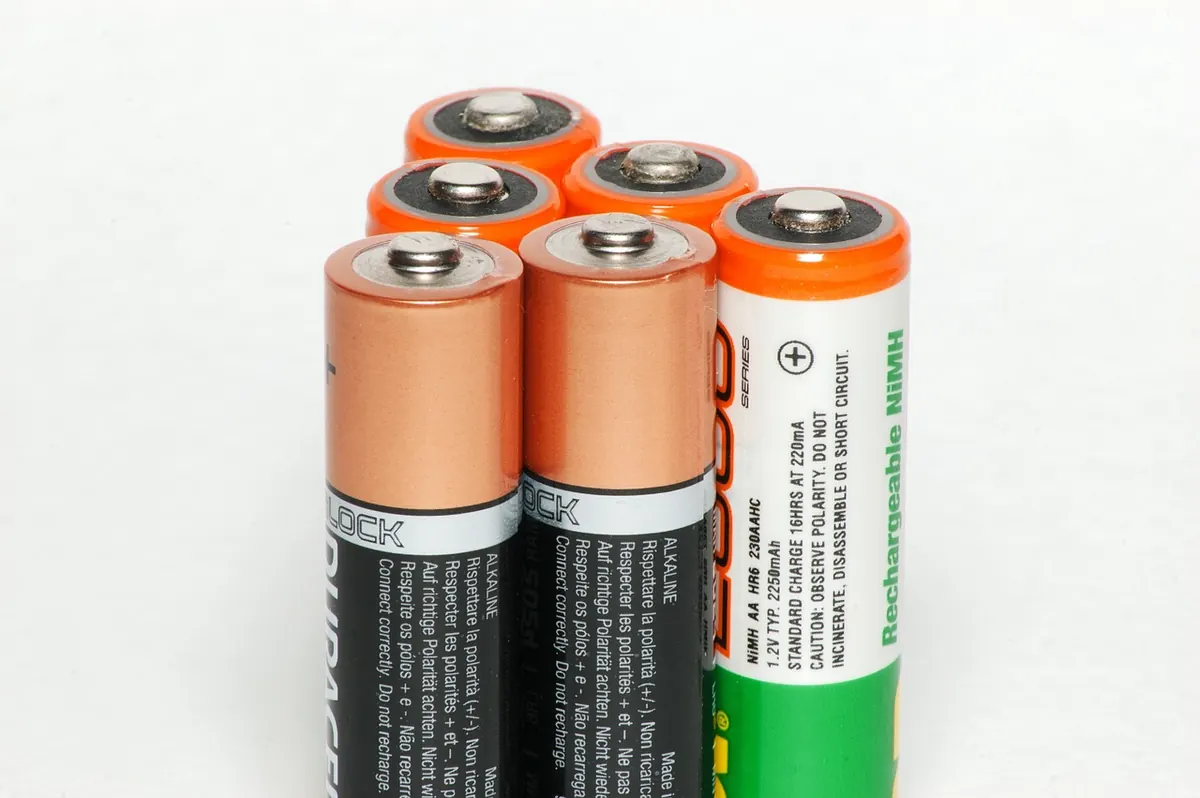
Single-use alkaline batteries are a different story, but many shops still collect them for recycling. If you are unsure whether a battery contains cobalt, treat it as recyclable and keep it out of the bin. The safest rule is simple: if it is rechargeable and holds a charge, it needs a proper collection point.
Store them safely at home before recycling
Preparing batteries takes a few minutes and makes a real difference. Work on a hard, non-flammable surface, away from curtains, paper and anything else that could catch light.
- Remove the battery from the device if the manufacturer says you can. Do not force a glued-in or soldered battery—leave it in the device and recycle the whole item.
- Tape the terminals. Put a strip of clear adhesive tape or insulation tape over the metal contacts. This stops stray metal—keys, coins, other batteries—from bridging the terminals and causing a short.
- Bag each battery separately. A small plastic bag or the original packaging works well. Do not pile loose cells in a drawer.
- Use a plastic tub or glass jar with a lid. Avoid metal tins, which can short the terminals if the tape comes loose.
- Keep the container cool and dry, away from children, pets and anything flammable. Do not store it in a hot car or direct sunlight.
- Never store damaged, swollen, leaking or hot batteries indoors. If a battery is swollen, leaking or hot to the touch, do not handle it with bare hands. Move it outside, away from your home, and seek advice from your council’s waste team or a qualified battery specialist. If it is smoking or hissing, get everyone outside and call 999.
Do not charge a battery you are about to recycle. A cell that is on its way out can behave unpredictably under charge.
Where to take them in the UK
You have several options, and most are free. Check ahead before you travel, especially for large e-bike or power tool batteries.
- Household Waste Recycling Centre (HWRC): most accept batteries, often in a dedicated bin near the entrance. Many also take small electricals and e-bike batteries—call first to confirm.
- Retailer collection points: supermarkets, electrical shops and DIY stores often have small battery bins near the tills or entrance. Some accept only household batteries up to a certain size.
- Kerbside collections: some councils provide a battery bag or small container. Put it out on collection day, not inside your general waste. Check your council’s website for the exact rules.
- Manufacturer or retailer take-back: when you buy a new e-bike, power tool or laptop, ask whether they will take the old battery. Some do, sometimes for a small fee or free.
- Vape recycling: many vape shops and some supermarkets have bins for disposable vapes. Use them only for vapes.
- Community schemes: libraries, community centres and repair cafés sometimes host collection points.
Never put batteries in your kerbside recycling. They can ignite in the sorting plant and put workers at risk.
Preparing different battery types
Phones, tablets and laptops
These often have internal batteries that are glued in place. Do not pry them out unless you know what you are doing. Take the whole device to an HWRC or a retailer that accepts small electricals. If the battery is removable, tape the terminals and bag it.
E-bikes and e-scooters
These are large, high-energy batteries. Tape any exposed terminals and take them to an HWRC that accepts them, or ask the retailer where you bought the bike. Never leave them in a communal bin store or hallway.
Power tools and cordless vacuums
Remove the battery pack if you can, tape the contacts, and take it to a DIY store or HWRC. Many brands also run their own take-back schemes.
Vapes
Disposable vapes contain a small lithium-ion cell. Do not bin them. Many shops have a dedicated bin. If not, take them to an HWRC that accepts batteries.
What not to do
- Do not put any battery in general waste or kerbside recycling.
- Do not burn batteries or put them in a fire.
- Do not puncture, crush or dismantle cells.
- Do not store loose batteries in a metal container.
- Do not leave batteries in a hot car or direct sunlight.
- Do not charge a damaged battery to “see if it works”.
- Do not assume a dead battery is safe—it can still hold enough charge to catch fire.
What happens to recycled batteries
Once collected, batteries are sorted by chemistry, often discharged for safety, then shredded. The resulting mix is separated into different material streams. Cobalt, nickel, copper and aluminium can be recovered and refined back into usable metals. The cobalt may end up as a compound used in new battery cathodes, closing the loop and reducing the need for virgin mining. The exact process varies by facility, but the principle is the same: keep the materials in circulation and keep the hazards out of general waste.
A simple routine that works
You do not need a workshop. Keep a small plastic tub with a lid in a cool cupboard. Put a roll of clear tape next to it. When a battery dies, tape the terminals, bag it, and drop it in the tub. Once every few months, take the tub to your local HWRC or supermarket collection point. Set a phone reminder if that helps.
For e-bike and power tool batteries, plan the drop-off when you next pass the recycling centre. If you are unsure about a particular battery, call your council’s waste team or ask at a local electrical retailer. They would rather answer a question than deal with a fire. And if a battery is swollen, leaking or hot, treat it as an emergency—move it outside, keep away, and seek professional advice.
Photo: Visor69 / Pixabay